One Size Does Not Fit All

untitled

Should my resume have an objective statement? Should it be in chronological order or reverse chronological order? Does my education go at the top or the bottom? Should my skills section include bullet points or a paragraph? How long should my cover letter be, should it include my personal mission statement?

I could go on and on with a never ending list of questions regarding the content, format, flow and chronology of your resume. There was a time when resumes were expected to conform to a somewhat specific format; a formulaic (if not archaic) standard of content inclusion and order. That is no longer the case. Depending on the research, a hiring manager can take anywhere from 3-12 seconds to review your resume. I’m of the mind that the higher level the position the longer they’ll spend initially reviewing your resume. However that being said, you need to think of your resume as a piece of real estate; it’s all about location, location, location.

If the job description is heavy on the bulleted technical skills; then your bulleted list of technical skills should take up the best real estate on your resume. If there is heavy weight given to your educational degrees or requirements, then that information should reside in the prime location. If the position requires writing samples, your objective statement and cover letter must be clear, concise and superbly written. I give very similar advice to students/graduates preparing for an interview. If the hiring manager is excited, mirror their enthusiasm. Look to your audience for your queues.

You can glean a lot of relevant information from a job posting/description.

  • Required skills – these are your key words.
  • Results Oriented & Proven Track Record – what success have you achieved at previous positions?
  • Relevant work experience – what positions have you held with transferrable skills?
  • Bachelor’s /Master’s Degree Required – make sure it’s front and center not buried on page 2.
  • Progressively responsible positions – not reverse chronological order.

I don’t claim to be the end all be all of the resume writing world. Doubtless there are many who would disagree with me on some points; however there is one area which I think we’ll all agree. The days of a one size fits all resume are gone. If you are not tailoring your resume for the job, industry, level and audience, the chances you will get the call are greatly diminished. Someone out there is taking the time upfront to perfect their image as the ideal candidate, are you?

For more interviewing tips, resume writing help or job search advice check back again to; “Connectthedotblog

Power of Positivity

positivity

In your last interview were you asked any of the following questions?

  • What are your weaknesses?
  • Tell me about the worst supervisor you ever had?
  • Why do you want to leave your current position?
  • Tell me about the most challenging co-worker you’ve ever delt with?
  • Have you ever delt with a difficult customer, what did you do and what was the result?

Do you know why hiring managers ask these questions? Well let me tell you. They want to see if you are a positive or negative person. Yes it really is that simple, and yes we ask those questions on purpose. We know if you are going to talk bad about a previous, supervisor, co-worker or company; you’ll talk bad about us as well. If you speak about yourself in negative terms, it’ likely you’ll do the same about the people around you.

These questions, for the most part, are not about finding out if you had a bad boss or co-worker so we can find out how to manage you better. These are questions designed to see how you will communicate with and about the organization you desire to join. These are questions designed to see if you are going to be a positive or negative force with our organizational culture.

So to answer your question, yes they are trick questions; however they are not tricky to answer in a way that will make you shine.

  • When asked about your weaknesses, your response should be about your greatest areas of opportunity. After all a weakness is just an area in our life we have not developed as fully as we would like. It’s not a weakness, is an opportunity for us to grow in areas we are not as strong.
  • When asked about your worst supervisor/boss or co-worker or customer; again you need to reframe the answer. You haven’t had bad anything; you may have had challenges with communication, direction or understanding but in each case you were able to overcome these challenges to create a satisfactory work environment or experience.

It’s not rocket science! It does however, take practice. Reframing comments to maintain a positive style of communication is a skill that must be honed. Hiring managers will continually throw questions at you to coax you into a feigned level of comfort to get you to provide them with a negative response. Don’t fall for it! Organizations are drowning with applicants and they are looking for reasons to disqualify candidates and get down to the gems. This is one of the ways they will accomplish their goal.

If you want to stand out; be smart, thoughtful, professional, and always, positive. I can’t stress this enough! Hiring managers want to bring productive, professional and positive individuals to their organization. It’s up to you to show them you are the best choice.

For more interviewing tips, resume writing help or job search advice check back again to; “Connectthedotblog

Finding A Leader Not A Manager

Finding Nemo

What do you believe are the key characteristics of a successful leader? How important are these characteristics to you as you look to move into a new position? Will having a manage or supervisor with these characteristics help you to be more successful? Do you want to work for someone who inspires you to do better, to grow and reach for higher goals?

If you answered yes to any of these questions, then I have one more for you. How do you identify these characteristics during an interview or hiring process? Better yet, how do you know the person you may be working for in the position you’re considering demonstrates these characteristics?

There is so much more to the work experience than schedule, salary, benefits and environment. There is the big ‘C’. Culture is often created and defined by the leaders in an organization; so how do you find out if you will be working for a leader or for a manager, because there is a big difference.

Navigating these waters can make you feel like Dory trying to find Nemo in the middle of the Ocean. Needle in a haystack doesn’t quite cut it. Where do you start? Who should you ask for help? Or do you, just keep swimming just keep swimming, swimming, swimming, swimming, hoping you don’t run into sharks, jellyfish or worse, humans!

Seeking a little assistance is never a bad thing. Here are a few questions you should stop and ask yourself and your interviewer/hiring manager before saying accepting any offer.

  • What is the management style of the person this position reports to?
  • What is their communication style?
  • What training and development programs are available to help someone new to this position be successful?
  • What does your new hire orientation consist of?
  • How does this position play a part in overall mission of the organization?
  • How frequently do individual reviews take place?

Yes this is a long list of questions and I could actually add a few more, but for the sake of brevity let me make my point.

  • Does the company care about your success?
  • Are they investing in human capital?
  • Do they value ongoing training and performance management?
  • Do you personally identify with the mission/vision of the organization?
  • Can you see yourself spending 70% of your waking hours working with and for these individuals?

If you can positively answer those questions, then you can feel confident you are making an informed decision. If you find that they either don’t know the answers to the above questions or are unwilling to answer them; then I say again you can feel confident you are making an informed decision.

An interview is a two way street. It has to be a good fit for everyone, that’s when the magic really happens. When it’s a one sided relationship or when you are unclear as to the value of your role, expectations or performance, then back away slowly and carefully consider the steps you are about to take and if they will align with your longer term goals.

For more interviewing tips, resume writing help or job search advice check back again to; “Connectthedotblog

Charming Can Only Get You So Far

strike three

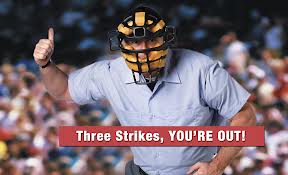
I was interviewing a candidate the other day for a Director level position in my organization. Now to be fair, the candidate wasn’t really qualified for the job but I could play connect the dots from his job experience to the skills needed for someone in this position to be successful. Plus he seemed like a colorful character from his background so I thought, why not! I scheduled him for a Skype interview and set to work.

First there were multiple technical difficulties. He tried to take the interview on his tablet, while at work, surrounded by people. Strike one!

Then his tablet and his phone cut out, not once, not twice, but three times. Ball one!

Next he did NOT research my organization or even read the job description so he could not speak intelligently about either. Strike two!

He borrowed a phone from a co-worker, called back and apologized, while at the same time asking his co-workers to keep it down while he was on this call. Ball two!

I asked him, “When you reviewed the job description, which areas did you feel would be the most challenging for you?” He replied, “None of them, I don’t think I’ll have any challenges at all.” Ball three!

It’s a full count…needless to say; I’ve known pretty much from the beginning that this is not someone that I’m going to move forward with. However I wanted to get to the final question, because I was really curious as to how he would answer it. He’s labeled himself a ‘talker’ and that he can motivate and coach anyone, and that there are no challenges he can’t overcome. I’m trying to decide if he is charming in an overconfident kind of way or completely arrogant in a really annoying way.

“So why should I consider you for this position?”

His reply, “because I’m me, and no one is going to be better than me.” Strike three, you’re outta there!

One of the best things about a full count, there’s only one pitch left. You have one more chance to hit it out of the park, walk to first base or fail miserably. (And yes, for my baseball fans, I know they can hit a foul ball and it remains a full count; however for the purpose of the argument let’s assume one more pitch.)

Having a powerful personality, the ability to converse easily with people combined with a charismatic energy will get you much farther in life than those who don’t possess such characteristics; however it will only get you so far. I would choose someone with a strong skill set, who understands the work that needs to be done and the qualities of leadership necessary to succeed over someone who is relying solely on their personality to move them forward.

This candidate was one question away from a bottom of the 9th walk off home run; but he came to the plate swinging a twig at a fastball, he didn’t even make contact.

  • He didn’t research the company or the specific job.
  • He didn’t research the industry.
  • He wasn’t prepared to answer real questions about any specifics; e.g. his experience and how that related to the job requirements.
  • He actually said his personality gets him what he wants, and I think he believed it.
  • He certainly didn’t seek any assistance with how to appropriately answer interview questions

When given the opportunity to redeem an incredibly lack luster ‘at bat’ performance he had no idea what to say other than “I’m me”. Well you’re obviously not Babe Ruth, but perhaps this approach to interviewing has worked for him in the past. As far as this interview went, it was like watching my 10 year old son try to hit off Randy Johnson; painful to watch, but I love rooting for the underdog.

For more interviewing tips, resume writing help or job search advice check back again to; “Connectthedotblog

You Said What in the Interview?

Dont

Have you ever been in an interview and said something you almost immediately wish you hadn’t? Worse yet did you say something you shouldn’t have and didn’t even realize it, only to find out later that was the deciding factor for you not being chosen for a position?

I have read several articles this week revolving around the kind of questions job seekers ask that they probably shouldn’t have.

Last week I was sitting in my office when a colleague shared that she was just interviewing a candidate for one of her open positions. The candidate asked about the work schedule and when she was informed it was 8am to 5pm her response was, “Oh, I can’t get up that early.” WHAT?

Then a friend of mine forwarded me an article she had just read titled, “ 8 of the Strangest Interview Questions Job Candidates Have Asked ” This highlighted yet again the type of career limiting questions that folks ask in an interview.

Words of advice:

  • Think before you speak. The question might seem benign to you, however how may it be received by the hiring manager looking for their next rock star?
  • Words have power and meaning. If you are unsure how a comment may be received, rephrase, reframe or refrain. Once it’s out there you can’t take it back, and yes they will remember it.
  • Know your audience. Take a moment to try and size up your interviewer; are they outgoing and gregarious or are they reserved and calculating? Whatever their demeanor, you should mimic the energy level. Don’t come out the gate with a crazy joke for someone who has a hard time smiling or shaking hands; you may turn them off when you want to impress them.
  • Exercise sound judgment. Don’t tell the interviewer that you can’t get up early enough to work the schedule they are hiring for. Don’t ask if Mom can come too. Don’t ask if the boss is single or how quickly you can put in for a raise or transfer.

The main purpose of an interview is to showcase your skills, experience and cultural fit. The best way to accomplish that is to have the hiring manager be able to visualize you doing the job. If you are asking questions during that first encounter that will cause them to take pause…your chances of getting the call back are slim.

For more interviewing tips, resume writing help or job search advice check back again to; “Connectthedotblog

DIY is Cool, Except in Your Job Search.

to do list

You inevitably can’t do a complete channel surf these days without hitting on some kind of DIY program. From rennovating your kitchen or bath to upgrading your dating life or turning your simple idea to a money making landslide. DIY is the trend that keeps on giving, except in your job search. This is one area of your life where having a little professional help can go a long, long way.

We’ve all been there filling out endless applications online and in person. Dressing up and prepping up for interview after interview only to not hear back. Face it, finding a job is a full time job; but at work, you have direction and structure. At work you have someone at the very minimum telling you where you’ll get the most bang for your buck. However when you are looking for work, there isn’t that person there helping, coaching, mentoring and motivating you to keep going.

DIY is not the way to go in a job search!

Now is the time to do a good hard review of the resources available to you. That means you need to step away from your computer and make a list of people you know that can help.

Who do you know in the industry?

  • Do the people that can help you, know you are looking for a new position?
  • Do they have an updated copy of your resume?
  • Have you reached out to industry professionals for an informational interview?
  • What networking opportunities are available in your area/industry?
  • Have you asked your network to critique your resume?
  • Friends, family, teachers, past co-workers, etc. you never know who may know someone you need to know.

I think the picture is getting clearer. You don’t have to go out and hire professional resume writer, although it may help. You don’t have to hire a career coach, however there are resources available that can assist you. Contact your local government job help organization, if you’re in school frequent your Career Services department. The point is, there is no reason to Do It Yourself! We aren’t talking a 2-day make over in your home; we’re talking about your future. This is not the time to try and go it alone, and the great thing is you don’t have to.

If anything good has come out of our recent recession it’s the recognition that job search skills and resources are a necessary part of every day life. Everyone needs a little assistance and direction sometimes.

That help can come in many forms:

  • Your local Department of Economic Security or Workforce Development
  • Educational assistance
  • Local staffing agencies
  • Reputable resume writing and career assistance organizations

Between your network of friends, family and associates and the availablity of public and private resources; you can turn this project from a to do into a done.

For more interviewing tips, resume writing help or job search advice check back again to; “Connectthedotblog

Why an interviewer wants to tell you why you were rejected, but can’t.

9-20-13 Rejcted

Have you ever wondered why you didn’t get the job? Have you ever been in the interview and known you weren’t going to be chosen? Have you ever thought you nailed an interview only to find out you didn’t? Well join the club; we have jackets, t-shirts, and hats.

In a perfect world, we’d get the feedback we so desperately need to grow, develop and do better; however, in the world we live in, it just doesn’t happen.

In my field, I work with literally hundreds of employers. Some will give me a call after one of my students has finished an interview to give me feedback. What they can do better, differently, more professionally. This is, indeed, rare.

Unfortunately, in today’s employment climate, there is such a fear that if you provide feedback, that information can in turn be used against you. Human Resource professionals have to be part recruiter, interviewer, counselor and lawyer. What they are and are not allowed to share is so limited that they are actually hurting today’s job seekers.

I would love it if my interviewer could tell me:

  • Your answers were too short
  • You didn’t seem prepared for the interview
  • Your presentation was not professional enough
  • You spoke too negatively regarding your past experiences and organizations
  • You weren’t able to articulate your skill-set well enough

If this feedback were offered to job seekers, they could actually improve their skills and do better the next time. Instead, we blame the educational system, our culture, the economy, and on and on, when we could allow HR and hiring managers to just offer back some helpful advice.

Instead we close the door and turn a blind eye to otherwise valuable employees without them having a clue as to why. And “Why don’t they?” you may ask. Simply, they are afraid of getting sued.

Just think what it would be like if at the end of an interview we could hear, “Thank you for coming in today to meet with me. May I give you a few helpful hints that may assist you with future interviews?” Bad um bump! How hard is that? Don’t send people back out into the cold job search world without giving them some kind of help to make them better for their next interview.

As a culture we have, in my opinion, become so afraid of helping people for fear of being sued, that we’ve stopped doing the right thing in favor of doing the safe thing. In the long (and short) run this ends up causing more harm than good.

There are a few things, however, you can do to try and get some feedback from your interview.

  • Contact the hiring manager after you’ve sent your thank you note and followed up (building rapport). Ask if they would be willing to offer you some advice on how you could do better in your next interview.
  • At the end of your interview, after you’ve asked for the job, ask if there are any concerns the hiring manger has about your ability to do the job.

While these tips may help you get some feedback, nothing will do as much good as being well prepared for the interview in the first place. Being proactive in your job search will get you so much further than chasing reactive information after you’ve been let down.

For more interviewing tips, resume writing help or job search advice check back again to; “Connectthedotblog

Graduates- don’t wait till after graduation to start the job hunt! Start now!

8-29-13 graduates...

I’m always surprised to get a call from a graduate that I haven’t heard from in months only to find out they are not working, have not been working, and haven’t even begun the career search.

“How have you been?”

“Fine thanks.”

“What have you been up to?”

“I took a break from the job hunt after graduation, but now I’m ready to start looking.”

“Did you keep in touch with your intern/extern supervisor?”

“No. I kinda just wanted to give my brain a rest after school.”

“Have you started applying with any of the employers you met with while in school?”

“No.”

“Do you have an idea where you’d like to work?”

“No. I just want a job. Can you help?”

Unfortunately, this conversation is far from infrequent. It doesn’t seem to matter how often I inform my students they need to strike while the iron is hot; inevitably, there are those who feel a 6-month vacation is not going to affect their chances of gainful employment. Even worse, they don’t feel the education they worked so hard for adds enough value to their skill set to obtain a career over a job.

WAKE UP! The country is full of people just looking for a job. We live in a country running short on skilled, educated workers, and you just want a job? Why did you go to college? Why did you spend all that time begging, stealing, and borrowing all that money to obtain your degree? Surely it wasn’t to get just a job?

If you are looking ahead at your graduation within the next 6-12 months, you should already;

  • Have a list of employers you want to work for.
  • Have a list of contact at those employers.
  • Know how your training/education will add value to their organization.
  • Have a kick butt resume.
  • Have a stellar cover letter.
  • 3-5 professional references all lined up.
  • Letters of recommendation from your instructors, supervisors, volunteer coordinators, etc.

Last but, by no means, least you must have enthusiasm, ambition, and determination to not quit until you obtain the career you dreamt about when you started your educational journey.

  • Don’t take 6-months off. Don’t take 6-minutes off.
  • Don’t ignore your resources who are there to help you.
  • And by no means, don’t ever underestimate the power of your education.

    “Education is the most powerful weapon which you can use to change the world.”
    ~Nelson Mandella

For more interviewing tips, resume writing help or job search advice check back again to; “Connectthedotblog

If you were a Muppet which would you be? The Strangest Interview Question I’ve Been Asked

kermit-the-frog-the-muppets

I’ve been working with students and graduates on mock interviews. The one question I always get asked is, “What is the strangest quetion you’ve ever been asked in an interview?”

  • Well, it’s not, “If you were an animial what would you be?” (A Lion by the way.)
  • “Which cheesy 80’s song do you listen to the most?” (Anything Richard Marx.)
  • “Which Muppet do you most closely identify with?” (This is a toss up between Kermit the Frog and Fozzy Bear, and is a constant souce of disagreement between my mother an myself.)

The strangest interview question I ever received came from a man I never thought would hire me, at a company I didn’t think I was qualified to work for, at the first interview I thought I’d blown. One question threw me into such a tail spin, I didn’t know if I was coming or going.

“So, I’m going to give you three minutes to ask me anything you want to ask, then you get 60-seconds to tell me what you’ve learned.”

I spent three minutes shooting off questions trying to discover family, home, hobbies, education, religious, and political information about my interviewer.

“Time’s up,” he said. “What did you learn?”

My response? “Well, did you want me to find out about you personally or professionally?

His response? “You probably should have asked that question first, shouldn’t you?”

OUCH! I began to shot off all my Holmesian conclusions and with a look of sheepish satisfaction, craving a fatherly approval, he looked at me and replied, “Thank you. We’ll be intouch.”

I forgot to mention this was my last interview of a day-long round robin of interviews for what I thought was a dream job and I just blew it, or so I thought.

I believe all stories should have a happy ending. Needless to say, I did get the job, and within 2-years, he was my direct supervisor. He promoted me to my first department head position and became my best, most infuential and beloved mentor. One day I got the gumption up to ask him about the question.

“Jim, what was the point of that question? What were you looking for in an answer?”

“Bets, there is no right or wrong answer. It is a question to see how you can communicate in a stressful or uncomfortable situation with executive level leaders. You did great. You didn’t stop. You fully used your time. Your answer was full of humor and insight, and you spoke articulately.”

It’s not alway about the right answer. but the right attitude. Be positive, be confident, and take risks. You never know where they can lead you. Mine lead me to a career path that, if I had hesitated trying to find the right answer, I might have missed out on.

For more interviewing tips, resume writing help or job search advice check back again to; “Connectthedotblog